Tuesday, December 11, 2012

Maria's story

I just read a story from WW2 called Maria's story. It was a very sad story, although it had a happy ending. Maria was 16, and lived in Poland with her family. They were not Jewish, but they lived in a Jewish neighborhood, so Maria had Jewish friends, and she spoke Jewish along with German, Polish and 3 other languages. The family had got on well with the Jews, as well as the Germans that lived in the area. Her father even owned a business along with a Jew. As the war started, the family sold their business, and moved to the countryside to a farm. One day, her mother was told that the SS was going to take her brother. He hid at another farm, but instead the SS took Maria. She was sent to a camp in Germany, and set to work at a factory along with many other girls. They were working under terrible conditions, and got only a slice of bread and some soup a day.
After four years as prisoners, they were freed by Americans. Many of the girls went to America and Canada, but Maria wanted to find her family, so she stayed at the camp and worked as interpreter at the red cross hospital for a year. During that year she met a young English man. they fell in love and got married, and moved to England together. After some time the Red Cross found her family in Poland, and they were all reunited.

  
On the pictures: polish refugees

If you want to read this story by yourself, here is the link: http://www.bbc.co.uk/history/ww2peopleswar/stories/65/a3864765.shtml

Trafalgar Square Christimas Tree

Every year a huge Christmas tree is given to London, from the city of Oslo in Norway. This has been given since 1947, which means that this year’s Christmas tree will number 66. The tree is a gift and a token of friendship, a way of thanking for the help Norway received during WW2. The Norwegian king, Haakon VI, escaped to England when the war broke out, and the Norwegian government was set up in London. Many Norwegians escaped to Britain during the war, and great parts of the resistance movement was lead from London. 

The tree is called "The Queen Of The Forest", and it is usually a ca. 50 years old spruce, at around 20 to 30 meters high. It is cut already in November, in a ceremony attended by the Oslo mayor and the British ambassador to Norway, before it begins its long journey over the sea to Immingham in England, and from there by lorry to London. It is set up 12 days before Christmas, and that day is an important day of Christmas for many Londoners. It is a signal of the countdown to Christmas. There's carol singing, poetry performed, and the tree is decorated in a traditional Norwegian style, with hundreds of white lights. 

This sign is placed beside the Christmas tree. 

Approximately 3000 from the Norwegian military died during WW2, and in total approximately 9 500 Norwegians died during and because of the war. This is 0.32 percent of the population in 1939.
Britain, however, had 382 700 military deaths, and in total 449 800 deaths.


Sunday, December 2, 2012

11th Hour

Today, I saw the movie "11th hour". It is a documentary about environmental issues, how the nature works, and what we humans do to it.  It tells about global warming, and the fact that we humans are destroying our planet, without giving it a second thought. We are poisoning the seas and the air, and we are way too many people. Before the industrial revolution the only energy we used was the current sun light. This limited how much food we could produce, and we were never more than a billion people. Now we use ancient sunlight, oil and coal, we have much more energy to use. What will happen when we run out of these resources? I actually learnt a bit from the film. I did not know that deforestation is such a huge problem, and I did not know that the global warming has such consequences.

During the film, I tried taking notes. It was pretty difficult, because the film was about such a complicated and important subject. I tried writing by hand, on my computer, and on a shared Google document with many others.

I like wiring on my computer, using One Note. One of the reasons why is that I can edit my notes both during and after i'm done. It is easier to understand what I have written, because when I write quickly by hand, it often looks terrible. However, with a computer, I will always understand what I have written! Many computers also have some sort of auto correction system, so that if a make small typing mistakes the computer will fix them for me.

I also like writing by hand. I do not know why, but I feel like I learn much more by doing it that way. It may be just out of habit, because we always wrote like that on school before, and I am simply used to doing it that way. The problem with this way of taking notes is that I either spend too much time trying to write nicely, or I write quickly and end up not being able to understand my own notes a few minutes later.

I did not like writing on a shared document. We were too many writing at the same time, and all the notes ended up being deleted. It didn't really work, because there is always someone who doesn’t work.


Tuesday, November 20, 2012

THE EDUBLOG AWARDS!

This year I would like to nominate a blog in the edublog awards. I want to nominate this student blog, in the category "best student blog", www.englishsandvika.wordpress.com , written by Hanne. She has a very good blog, with interesting posts, a good layout and she has got very many hits!

I would also like to nominate a blog in the category "best teacher blog" : http://www.annmic.wordpress.com/ , written by my teacher, Ann.

Tuesday, November 13, 2012

Questions


·        Do you think there is more pressure on how you perform/write when you use blogs instead of writing a paper for the teacher only?

I think there is more pressure, because many people can see it, not just me and the teachers. I don't really know if that is a good or a bad thing, because if write a good text that I am proud of it is fun if more people read it. However, if I make a terrible post I may not want others than myself to see it. 

·        Do you think the use of blogs reduces the difference between your work at school and your everyday life?
It is a bit weird to write a blog for school, because blogging is something normally would associate with 14 year old girls, but now it has turned more into a school thing. So, it still feels like school work, because this is not something that I want to do, and I would not sit down and write a blog post outside of school. But, I think it is a modern way of teaching, which I think is good. 

Saturday, November 3, 2012

Big Miracle an the Alaskan natives


I do not know whether the film gives a realistic view about how it is to live in Alaska. I do not really know anything about how it is to live in Alaska, but I guess it is pretty similar to living in northern Norway. Maybe some readers from Alaska could tell me how it is to live in Alaska for them.

I've recently seen the movie ‘’Big Miracle’’. It is about three whales trapped in the ice in Alaska. They have no chance of surviving, because the weather is getting colder, and their little breathing hole in the ice is slowly closing. The local Eskimos, the natives of Alaska, give them only a few days left to live, and want to hunt them down for food. But, as a news reporter makes a small story about them that is showed on national TV, the whales receive a whole world’s sympathy. Greenpeace activists, politicians, Eskimos, news reporters and normal people all cooperate to save the wales, however, with very different personal motives. 


Greenpeace is an international environmental organization. They say that they work to keep the ‘’earths life in all its diversity’’. They are known for working against thing like deforestation, global warming, over-fishing and nuclear weapons. They use non-violent means to reach their goals, such as demonstrations, giving out information, and direct actions. Greenpeace is a huge organization with more than 3 million members, which means that they can make a big influence, they have even been called the most visible environmental organization in the world. Here in Norway, they are specially working against the whaling. Like in the movie, where Greenpeace wanted to save the whales from being killed by the Eskimos.
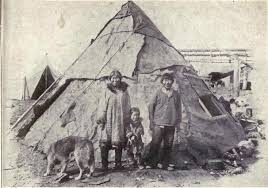
The Eskimos, or the Inuits, are the native people of Alaska.  The traditionally live of hunting and fishing whale, seal, fish and other animals. They could even catch polar bears and musk ox. As there are no plants or roots growing in the areas the Eskimos traditionally lived, they used sea grass with the food. There are 20 different Inuit languages and dialects, however, some of them are critically endangered, and some are even lost. That led to the establishment of the Alaskan Native Language Centre, in 1972. The centre works on researching and preserving native literature and information about native languages. Today, many Inuits live a modern life, just like anyone else. The furry coats that we saw in the movie are not an everyday suit, they used as a ceremony, probably similar to the traditional Sami clothing in Norway. The Inuit culture has faded over the years, but, they still try to keep their traditional lifestyle, and the languages and traditions are taught to the children. 
 
                                                                                        An Eskimo family from 1915